Penn State Abington | Woodland Biology Lab Renovation
In 2024, The Pennsylvania State University engaged Chiang | O’Brien Architects as part of a design-build team to renovate the biology teaching and research laboratories in the Woodland Building at the Commonwealth Campus at Penn State Abington. Originally constructed in 1969 and expanded in the early 1970s, the facility had not been significantly updated in over 50 years and no longer supported current pedagogy or standards for laboratory instruction, safety, or technology.
Inefficient layouts, outdated mechanical systems, and limited accessibility constrained the existing labs. Teaching labs were interrupted by columns obstructing sightlines, non-ADA-compliant benching, and poor acoustics caused by outdated, noisy ventilation systems. Storage, prep, and specialty lab spaces were fragmented and often accessible only through other labs, limiting functionality and flexibility.
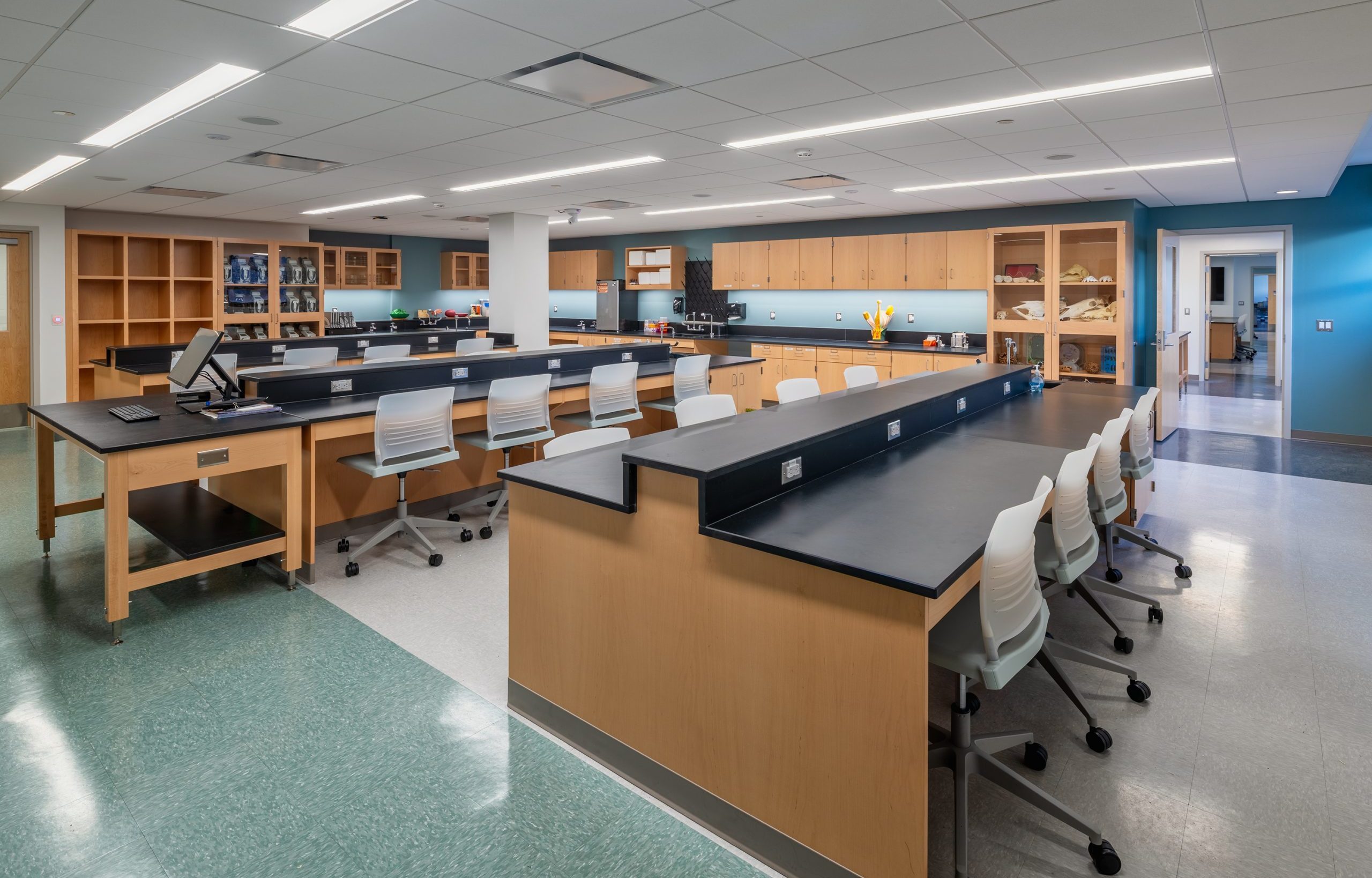
The design goal was to create a modern, flexible laboratory environment that supports both teaching and research while improving safety, accessibility, and overall functionality. The driving priority was the addition of a third teaching laboratory to expand capacity, address scheduling conflicts caused by excess demand for lab space, and support program growth, while right-sizing the labs and ensuring safe circulation.
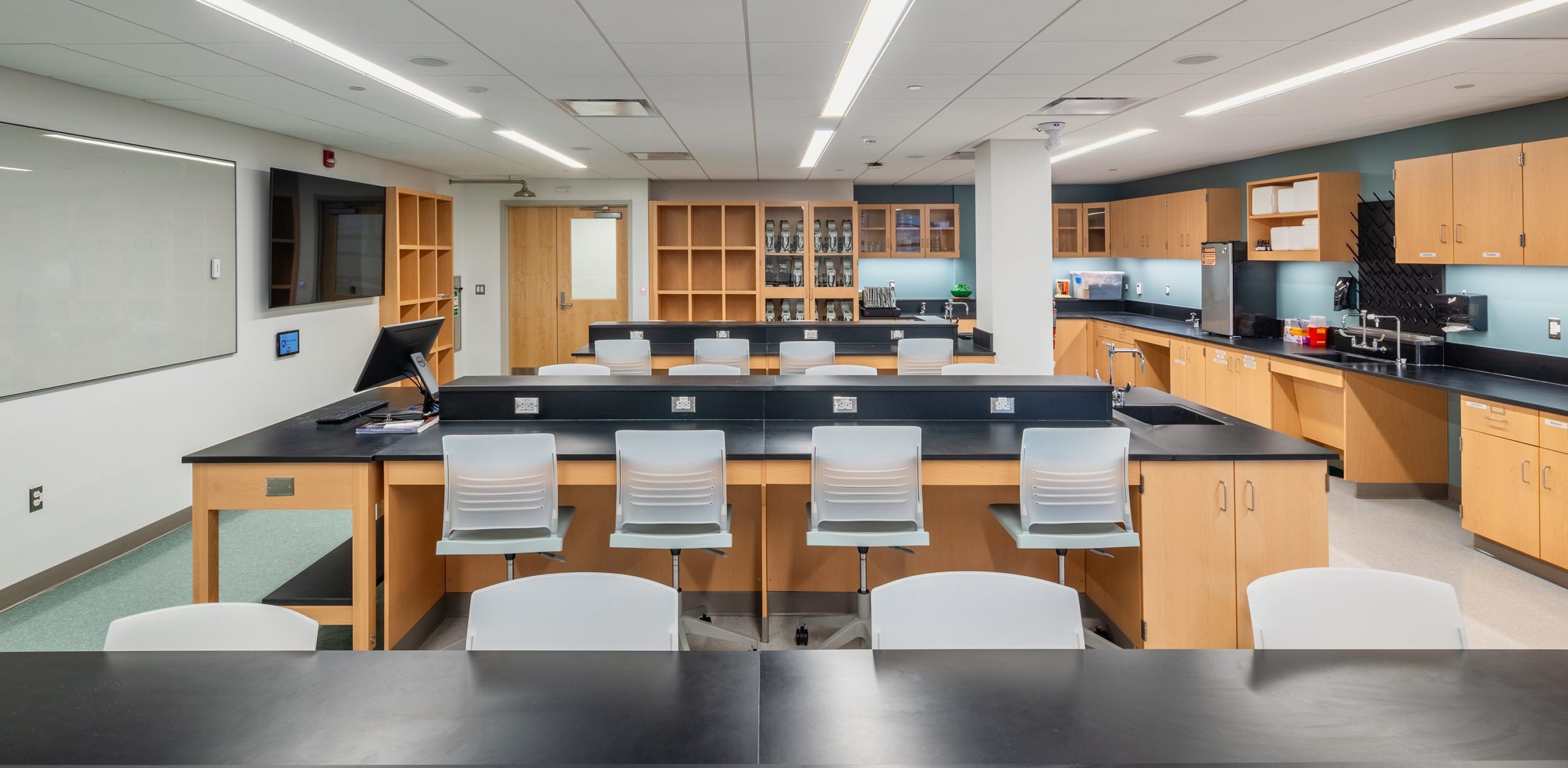
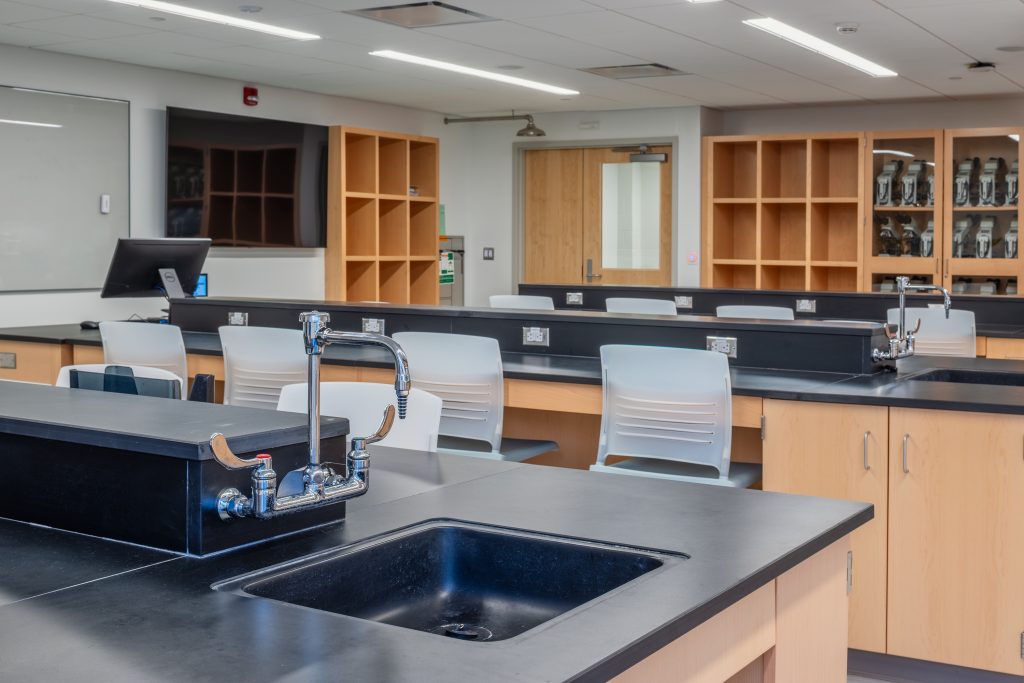
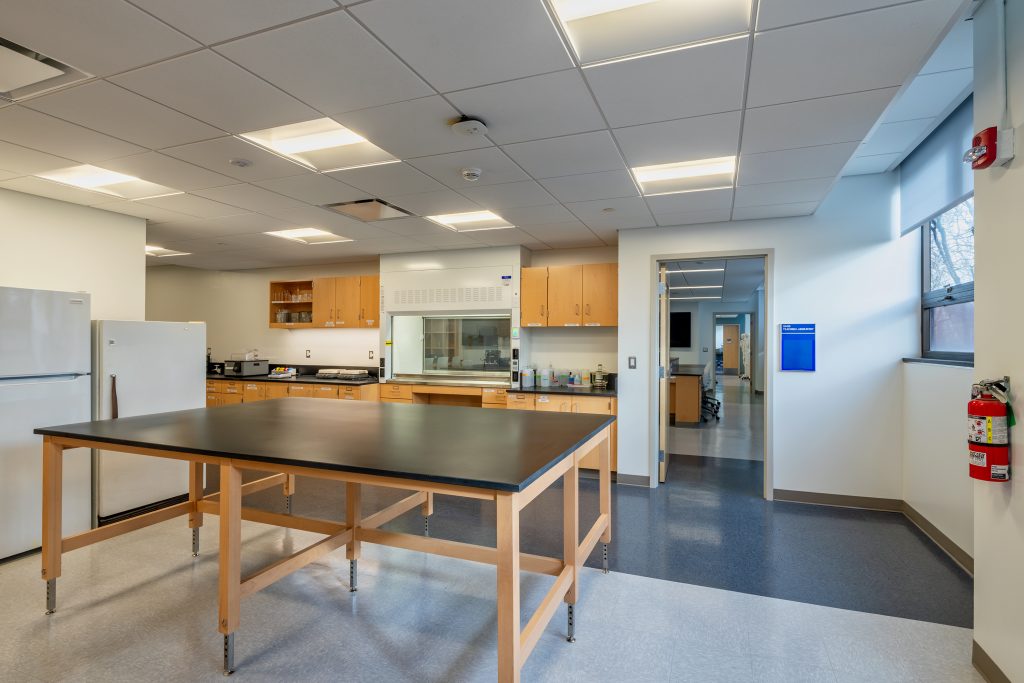
The approved design reorganizes the program into a more efficient, cohesive layout, clustering research labs and improving adjacencies among teaching labs, prep spaces, and shared equipment areas. Strategic reallocation of adjacent space enabled the team to meet program requirements and create better-proportioned spaces and sightlines without compromising the labs’ quality or usability. The teaching labs are intended to be interchangeable across a range of coursework and are supported by prep and equipment rooms that are accessed directly from the labs, facilitating pre-class setup, while also being independently accessible from the corridor without disrupting lab classes.
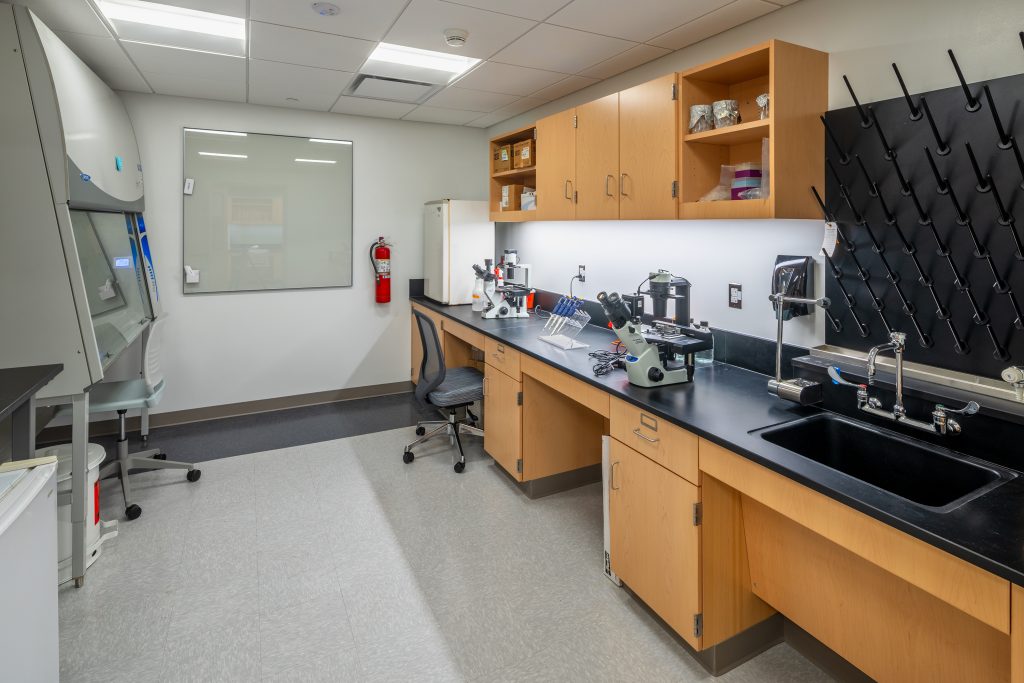
Research Labs now share an equipment lab and have access to supporting specialty labs. The research labs were intentionally designed for future flexibility, allowing for a range of research to support both current and future faculty interests.
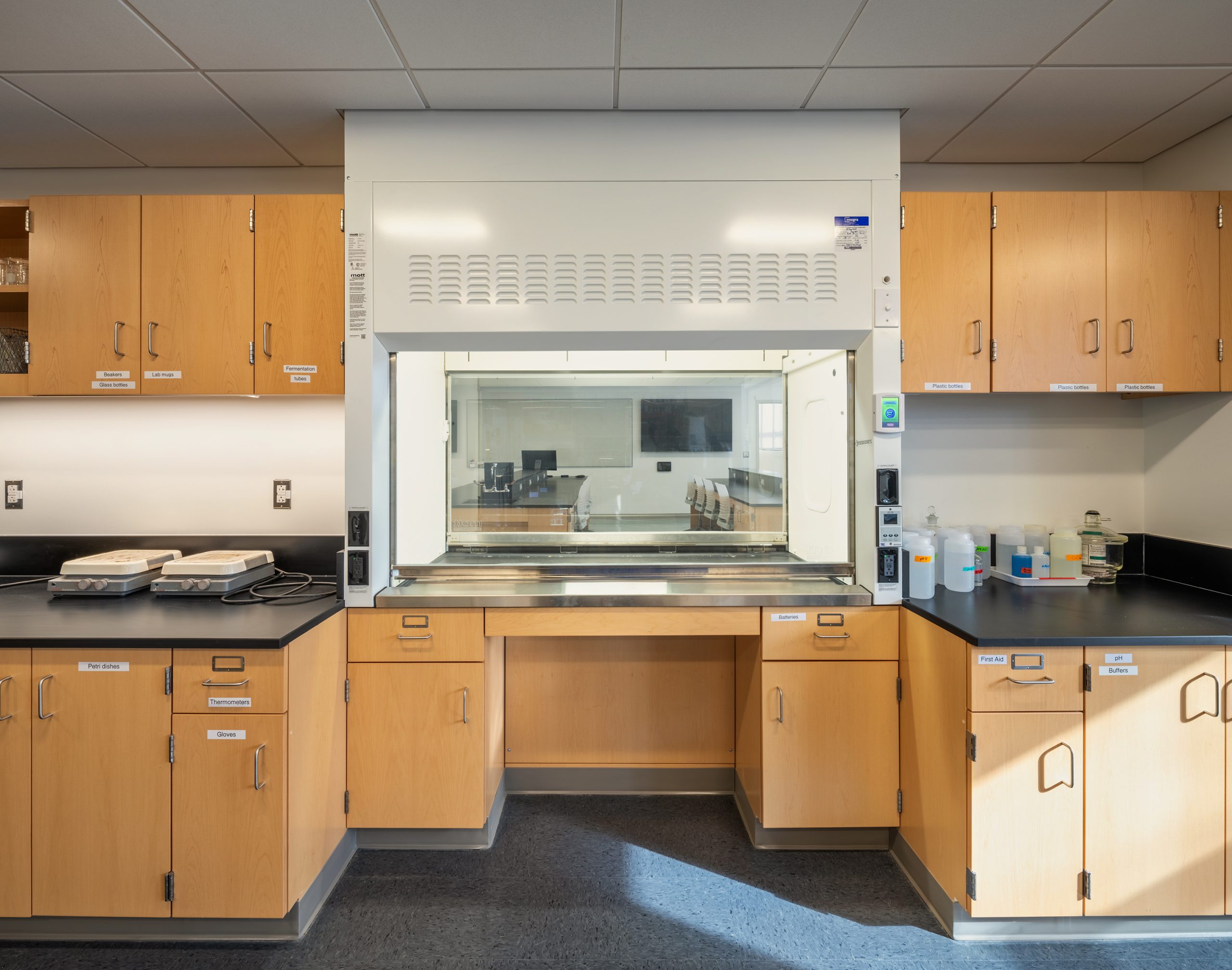
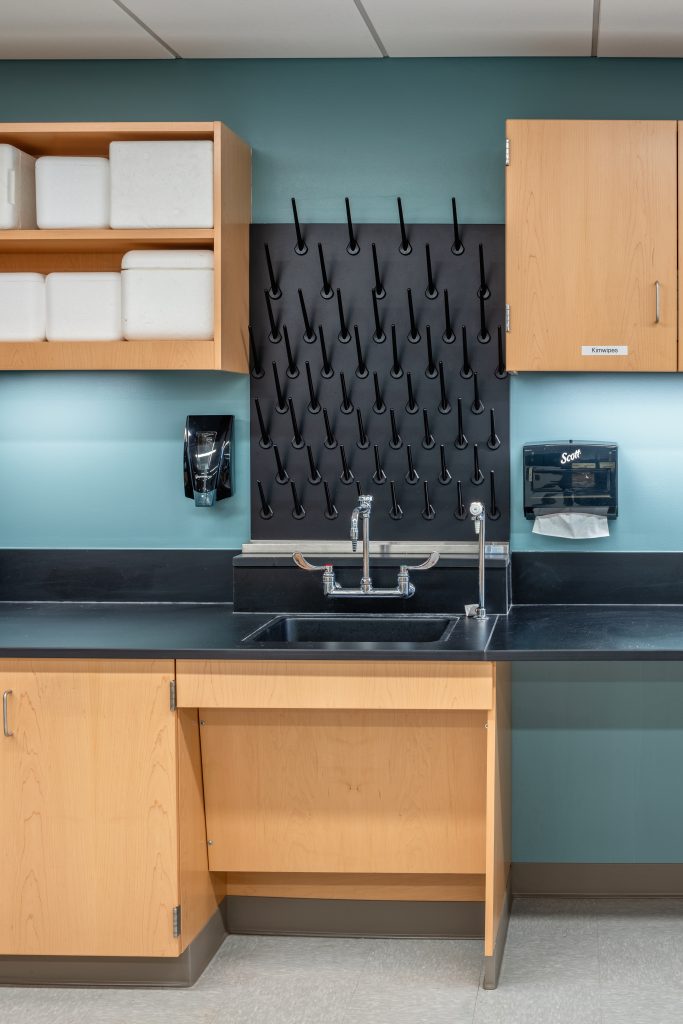
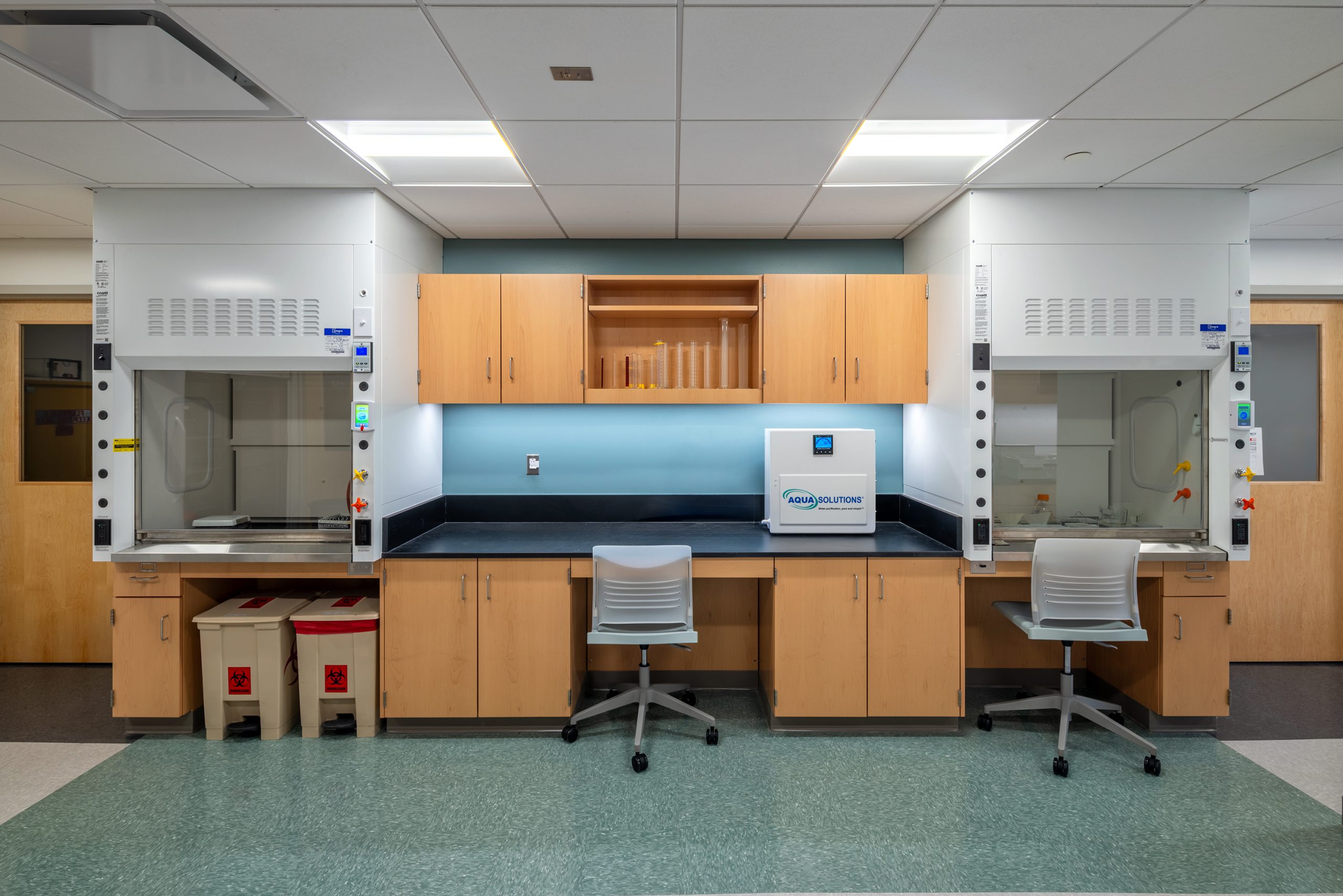
The renovation is ADA compliant, with countertop heights, upgraded laboratory casework, and sink access, all supporting a range of potential student needs. Reconfigured class lab layouts promote better student engagement. New, energy-efficient fume hoods and updated mechanical systems bring the facility into compliance with current safety and performance standards, while significantly improving indoor environmental quality and acoustics.
The completed design provides Penn State Abington with a modernized biology facility that supports evolving pedagogy, improves safety and accessibility, and creates a flexible, future-ready environment for both teaching and research.